
Fluorinated Ethylene Propylene (FEP)
Last updated: 02/2026 | Written by: Content Team | Reviewed by: Federico Lipparini

ISO
International Organization for Standardization

FDA
Administration for Foods and Drugs

RoHS
Restriction of Hazardous Substances
Fluorinated Ethylene Propylene (FEP) is a high-performance copolymer composed of tetrafluoroethylene (TFE) and hexafluoropropylene (HFP), making it a member of the fluoropolymer family. Fluoropolymers are known for their exceptional chemical resistance, thermal stability, low friction, and electrical insulating properties. FEP shares many of the characteristics of polytetrafluoroethylene (PTFE), such as chemical inertness and non-reactivity, but it offers a significant advantage in processability. Unlike PTFE, which requires compression molding, FEP can be melt-processed, extruded, or injection molded, allowing for a wider range of industrial and consumer applications.
FEP is widely used in wire and cable insulation, chemical processing equipment, non-stick coatings, and medical components. Its combination of chemical resistance, electrical insulation, thermal stability, and flexibility makes it indispensable in industries where reliability, safety, and long-term performance are critical. Its semi-transparent nature also allows for visual inspection in applications such as tubing and films, a property that is not available in opaque PTFE.
Chemical Structure and Properties
Composition and Formula
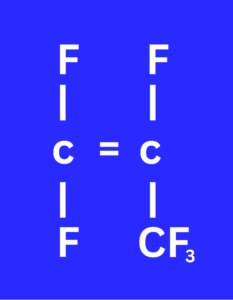
FEP is a copolymer consisting of tetrafluoroethylene (TFE) and hexafluoropropylene (HFP). Its general chemical formula is:
(C₂F₄)_x(C₃F₆)_y
This composition provides FEP with a unique set of chemical, thermal, and mechanical properties that make it suitable for demanding industrial, electrical, and medical applications.
Key Chemical and Physical Properties
- Chemical Inertness: FEP is resistant to most acids, bases, and solvents, including aggressive chemicals like hydrochloric acid, sulfuric acid, and acetone. This property ensures its longevity and reliability in chemical processing and laboratory applications.
- Non-Stick Surface: FEP exhibits a low coefficient of friction, similar to PTFE, which allows for non-stick and sliding applications. This makes it ideal for coatings, release liners, and surfaces where material adherence must be minimized.
- Thermal Stability: FEP can withstand continuous service temperatures of approximately 205–215°C, making it suitable for high-temperature electrical insulation and chemical processing environments.
- Dielectric Properties: FEP has a low dielectric constant of approximately 2.1 and excellent insulating characteristics, enabling high-frequency electrical and aerospace applications.
- Transparency: Unlike PTFE, FEP is semi-transparent, allowing visual inspection of fluids in tubing or packaged materials in films.
- Melt Processable: FEP can be processed by extrusion, injection molding, or other melt-processing methods, providing flexibility in manufacturing and design.
Mechanical and Electrical Characteristics
FEP not only excels chemically and thermally but also provides impressive mechanical and electrical performance.
- Tensile Strength: Typically ranges from 20–30 MPa, depending on the formulation and processing conditions.
- Elongation at Break: 200–300%, indicating excellent ductility and flexibility.
- Flexibility: FEP is more flexible than PTFE, which allows it to be used in thin-walled tubing, high-performance wire insulation, and other applications requiring bending and flexing.
- Coefficient of Friction: Low friction similar to PTFE, ideal for non-stick coatings and smooth material flow.
- Dielectric Strength: 20–30 kV/mm, making it suitable for high-voltage insulation in electrical and aerospace applications.
These characteristics allow FEP to meet the rigorous demands of aerospace, medical, chemical, and electrical industries.
Applications of FEP
FEP is widely used across various sectors due to its versatile properties. Key applications include:
1. Wire and Cable Insulation
- FEP is a preferred material for high-performance electrical wires in aerospace, military, medical, and industrial applications.
- Its thermal stability and chemical resistance make it suitable for plenum-rated and high-frequency cables.
- The flexibility of FEP insulation ensures ease of installation and reduces the risk of wire breakage in tightly routed systems.
2. Chemical Processing Equipment
- FEP is used for linings, tubing, gaskets, and seals in chemical plants.
- Resistant to aggressive acids, bases, and solvents, it ensures safe handling of corrosive fluids.
- Its non-reactivity prevents contamination in sensitive chemical processes, including pharmaceutical and high-purity chemical production.
3. Coatings and Films
- FEP provides non-stick coatings for cookware, industrial molds, and release liners.
- Its semi-transparent films are employed for chemically resistant packaging and protective layers.
- The combination of chemical inertness and low friction enhances surface performance in multiple applications.
4. Industrial and Laboratory Applications
- FEP tubing is commonly used for high-purity fluids in laboratories and pharmaceutical production.
- Seals, gaskets, and protective linings in corrosive environments benefit from FEP’s chemical resistance and durability.
- Its flexibility allows for complex routing of tubing and reduced maintenance requirements.
5. Medical Applications
- FEP is used in catheters, flexible tubing, and other medical components requiring biocompatibility and chemical inertness.
- Its flexibility and smooth surface minimize friction and potential tissue irritation during medical procedures.
- FEP is sterilizable, making it suitable for repeated use in clinical and surgical applications.
Advantages of FEP Over PTFE
| Property | FEP | PTFE |
| Processability | Melt-processable (extrusion, injection molding) | Compression molding only |
| Transparency | Semi-transparent | Opaque |
| Flexibility | High | Lower |
| Temperature Resistance | Up to ~205°C | Up to ~260°C |
| Chemical Resistance | Excellent | Excellent |
| Dielectric Properties | Excellent | Excellent |
| Coefficient of Friction | Low | Very Low |
FEP combines the chemical and thermal properties of PTFE with superior processability. Its ability to be extruded, injection molded, or used in thin films broadens its industrial applicability, making it more versatile than PTFE in many manufacturing contexts.
Processing Methods of FEP
- Extrusion: FEP can be extruded into films, tubing, and insulation layers for wires and cables.
- Injection Molding: Enables the production of complex components such as seals, connectors, and fittings.
- Sheeting and Laminating: FEP sheets can be used as linings, membranes, or protective layers in chemical and food processing.
- Coating Applications: FEP can be applied as a non-stick or chemically resistant coating for industrial molds and surfaces.
These processing methods allow engineers and designers to exploit FEP’s combination of thermal, chemical, and mechanical performance in a wide range of practical applications.
Conclusion
Fluorinated Ethylene Propylene (FEP) is a versatile fluoropolymer that offers exceptional chemical resistance, low friction, thermal stability, dielectric insulation, and processability. Its melt-processable nature allows for extrusion, injection molding, and film production, making it more adaptable than PTFE in applications requiring complex shapes or flexible tubing.
FEP is used extensively in wire and cable insulation, chemical processing equipment, non-stick coatings, laboratory tubing, and medical devices. Its semi-transparency, flexibility, and chemical inertness make it suitable for high-purity applications, aerospace, and medical industries.
By combining PTFE-like chemical and thermal properties with superior manufacturability, FEP provides an ideal solution for engineers seeking reliable, long-lasting materials in demanding industrial and consumer applications.
Frequently Asked Questions (FAQs)
What is FEP?
FEP is a fluoropolymer made from tetrafluoroethylene and hexafluoropropylene, offering chemical resistance, low friction, and thermal stability.
How is FEP different from PTFE?
FEP is melt-processable and semi-transparent, whereas PTFE requires compression molding and is opaque. FEP is also more flexible, making it suitable for tubing and wire insulation.
What are the main applications of FEP?
Wire and cable insulation, chemical and pharmaceutical tubing, non-stick coatings, and films.
What is the maximum operating temperature of FEP?
Approximately 205–215°C, slightly lower than PTFE’s 260°C limit.
Is FEP chemically resistant?
Yes, FEP resists acids, bases, solvents, and most other chemicals, similar to PTFE.
Can FEP be used for high-frequency cables?
Yes, its low dielectric constant and excellent insulating properties make it ideal for aerospace and high-frequency electrical applications.