
Corrosive
Last updated: 02/2026 | Written by: Content Team | Reviewed by: Federico Lipparini

ISO
International Organization for Standardization

FDA
Administration for Foods and Drugs

RoHS
Restriction of Hazardous Substances
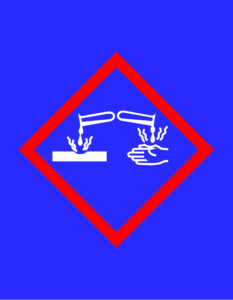
Corrosive substances are materials whether liquids, gases, or solids that can chemically destroy, degrade, or irreversibly alter other substances or living tissues upon contact. These substances are commonly encountered in laboratories, industrial manufacturing, environmental systems, and even household products. Corrosive chemicals pose significant hazards because they can attack metals, plastics, ceramics, and biological tissues, leading to material failure, health risks, and environmental damage.
Understanding corrosive behavior is crucial for several reasons: selecting appropriate materials for industrial applications, designing safe laboratory environments, implementing proper storage and handling practices, and preventing costly damage to equipment and infrastructure. Corrosivity is not limited to strong acids or bases; many oxidizers, salts, and reactive gases can also cause corrosion under certain conditions.
Definition and Scientific Explanation
A substance is considered corrosive if it initiates a chemical reaction that deteriorates another material on contact. In scientific terms, corrosion is the gradual destruction of a material by chemical or electrochemical reactions with its environment. Corrosive effects vary depending on the material affected:
- Metals: Corrosion often appears as rusting, pitting, or cracking, reducing mechanical strength.
- Organic materials: Polymers, plastics, and wood may degrade, fade, or become brittle.
- Living tissues: Contact can lead to chemical burns, irritation, or long-term tissue damage.
Corrosion involves several chemical mechanisms, including oxidation, reduction, acid-base reactions, and electrochemical processes, which can be influenced by environmental factors such as temperature, humidity, pH, and the presence of other chemicals.
Mechanisms of Corrosion
1. Oxidation
Oxidation is a primary mechanism by which metals corrode. For example:
- Iron (Fe) reacts with oxygen in the presence of moisture to form iron oxide (rust), weakening the metal’s structural integrity.
- Aluminum (Al) forms a thin protective oxide layer, but under extreme conditions, this layer can break down, leading to localized corrosion.
Oxidation is influenced by environmental conditions; higher humidity and elevated temperatures accelerate metal oxidation.
2. Acid-Base Reactions
Strong acids and bases can attack metals, organic matter, and polymers:
- Acids such as hydrochloric acid (HCl) or sulfuric acid (H₂SO₄) react with metals to release hydrogen gas and form salts.
- Bases like sodium hydroxide (NaOH) or potassium hydroxide (KOH) can hydrolyze proteins, cellulose, and certain plastics, causing chemical degradation.
These reactions often involve proton transfer (in acids) or hydroxide attack (in bases) that disrupt molecular structures.
3. Electrochemical Reactions
In aqueous environments, corrosive substances can initiate electrochemical processes, leading to localized metal loss, such as:
- Galvanic corrosion: Occurs when two dissimilar metals are in electrical contact in the presence of an electrolyte.
- Pitting corrosion: Localized attack forms small cavities or pits in the metal surface, which can penetrate deeply and weaken structural components.
4. Environmental Factors
The severity of corrosion is influenced by:
- Temperature: Higher temperatures accelerate chemical reaction rates.
- Humidity and moisture: Water acts as an electrolyte, promoting corrosion.
- pH: Extreme acidic or alkaline environments intensify corrosive reactions.
- Chemical composition: The presence of salts, oxygen, and other reactive substances can enhance corrosion rates.
Common Corrosive Substances
1. Acids
Acids are among the most common corrosive chemicals. Examples include:
- Sulfuric acid (H₂SO₄): Used in batteries, chemical synthesis, and industrial cleaning.
- Hydrochloric acid (HCl): Employed in metal cleaning, pH adjustment, and food processing.
- Nitric acid (HNO₃): Utilized in fertilizers, explosives, and metal etching.
2. Bases (Alkalis)
Strong bases are equally corrosive:
- Sodium hydroxide (NaOH): Common in soap manufacturing, drain cleaners, and chemical processing.
- Potassium hydroxide (KOH): Used in fertilizers, batteries, and industrial chemical production.
3. Oxidizers
Certain oxidizing agents can corrode metals and organic materials:
- Chlorine (Cl₂): Corrosive to metals and respiratory tissues; widely used in water treatment.
- Hydrogen peroxide (H₂O₂): Used as a disinfectant and bleaching agent; strong solutions can oxidize surfaces.
4. Industrial Chemicals
Industrial chemicals may also be corrosive:
- Ammonia solutions: Can attack metals and cause irritation to eyes and respiratory systems.
- Acidic or alkaline cleaning agents: Used in food processing, manufacturing, and laboratory environments.
Effects of Corrosion
On Metals
- Rust formation: Weakens structural integrity.
- Pitting and cracking: Leads to localized failure.
- Loss of mechanical strength: Reduces load-bearing capacity and durability.
On Organic Materials
- Degradation of plastics or polymers: Can cause brittleness or structural failure.
- Color fading: Chemicals may alter pigment composition.
On Living Tissue
- Chemical burns: Strong acids and bases damage skin layers.
- Eye damage: Corrosive splashes can cause permanent injury.
- Respiratory irritation: Inhalation of corrosive vapors may harm lungs and mucous membranes.
Applications and Industrial Relevance
Material Selection
Understanding corrosivity is critical for engineers selecting materials in chemical plants, pipelines, and industrial equipment. Corrosion-resistant materials such as stainless steel, titanium, fluoropolymers, and coated metals are commonly used to enhance durability and safety.
Protective Coatings
Surfaces can be protected with:
- Non-reactive coatings: Fluoropolymer or epoxy coatings prevent direct contact with corrosive agents.
- Galvanization: Zinc coatings protect iron and steel from oxidation.
Waste Treatment
Industries neutralize corrosive waste before disposal to prevent environmental contamination. Acidic waste may be neutralized with bases, and alkaline waste with acids.
Laboratory Safety
Proper storage, handling, and containment of corrosive chemicals prevents accidents. This includes using fume hoods, chemical-resistant containers, and spill containment systems.
Safety and Handling
- Personal Protective Equipment (PPE): Gloves, goggles, face shields, lab coats, and chemical-resistant footwear are essential.
- Proper Storage: Corrosive substances should be stored in compatible containers, segregated from incompatible chemicals.
- Emergency Preparedness: Eyewash stations, safety showers, and neutralizing agents should be readily available.
- Ventilation: Use fume hoods to prevent inhalation of harmful vapors.
- Training: Personnel must be trained in chemical handling, spill response, and first aid.
Conclusion
Corrosive substances are powerful chemicals capable of causing significant damage to materials and living tissue. Understanding their mechanisms, reactivity, and environmental factors is essential for maintaining safety, preventing equipment failure, and reducing health hazards.
Implementing corrosion-resistant materials, protective coatings, and proper handling procedures plays a critical role in mitigating the risks associated with corrosive chemicals in industrial, laboratory, and domestic settings.
By combining scientific knowledge, engineering controls, and safety protocols, it is possible to manage corrosive substances effectively while maintaining operational efficiency and protecting human health.
Frequently Asked Questions (FAQs)
What does corrosive mean?
A corrosive substance can chemically destroy or irreversibly damage other materials or living tissues on contact.
What are common examples of corrosive substances?
Strong acids (sulfuric, hydrochloric), bases (sodium hydroxide), and oxidizers (chlorine, hydrogen peroxide) are typical examples.
How does corrosion affect metals?
It can cause rusting, pitting, cracking, and weakening of structural integrity.
Are all corrosive substances dangerous to humans?
Yes, many can cause burns, eye damage, and respiratory irritation if mishandled.
How can you protect against corrosion?
Using resistant materials, protective coatings, neutralization, and proper storage and handling reduces corrosion risk.
Why is understanding corrosivity important in industry?
It ensures safety, material longevity, and operational efficiency by preventing chemical damage.